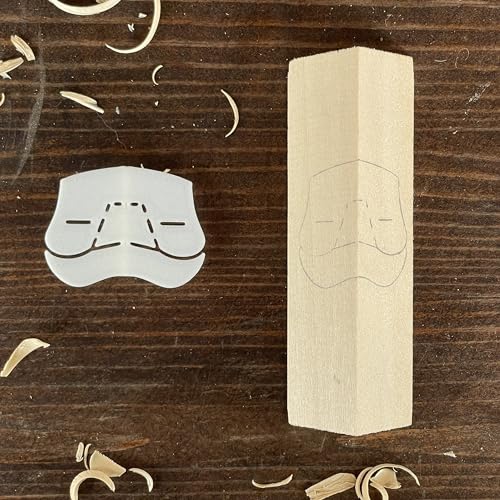
Wood carving stencils sound simple: place the stencil on a block of wood, trace the lines, and start carving.
But after using different stencil styles, materials, and brands, it becomes obvious that not all wood carving stencils are made for the same job. Some are great for painting signs but too flimsy for carving layouts. Some are easy to store but hard to keep aligned. Others hold up well, give repeatable results, and make the carving process much easier for beginners.
In this review, we are looking at wood carving stencils from a practical, hands-on carving perspective. The goal is not just to ask, “Can this stencil make a mark on wood?” The better question is:
Does this stencil help you carve cleaner, more accurate, more repeatable projects?
For this comparison, I looked at several common stencil types wood carvers may run into:
- Thin flexible plastic or mylar craft stencils
- Paper or printable carving templates
- Adhesive vinyl transfer stencils
- Laser-cut reusable stencil sheets
- Other generic printed carving stencils
- Our 3D printed wood carving stencils as the benchmark comparison
The main testing areas were durability, ease of use, tracing accuracy, carving accuracy, beginner friendliness, and how well each stencil style holds up after repeated use.
How We Tested the Stencils
To keep the comparison fair, each stencil type was tested using the same basic process:
- Place the stencil or template on a prepared wood blank.
- Trace the design with a pencil or fine marker.
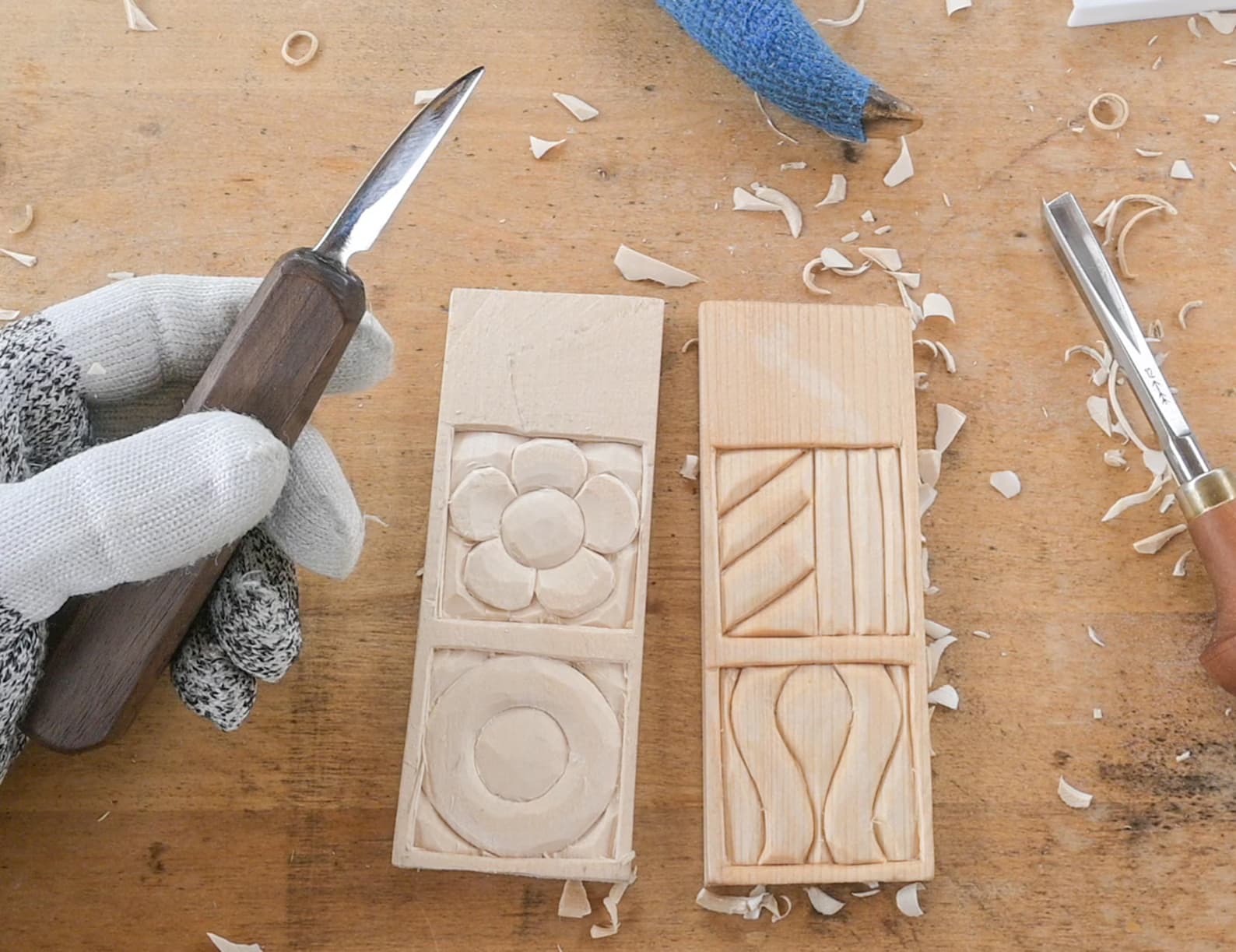
- Carve the main layout lines using a V-tool and carving knife.
- Check how accurately the carved piece followed the original design.
- Reuse the stencil multiple times to see how it held up.
The focus was on real-world wood carving use, not just craft-table use. A stencil that works great for paint may not be the best option for carving, especially when the design needs clear eyes, noses, beard lines, corners, folds, or other detail points.
For wood carving, the best stencil needs to do three things well:
First, it needs to stay in place. If the stencil shifts while tracing, the carved project starts with a bad layout.
Second, it needs to create clean, readable lines. If the lines are too vague or distorted, beginners have to guess where to cut.
Third, it needs to survive repeated use. A good carving stencil should not become useless after one or two projects.
Quick Comparison Table
| | | | |
|---|
| | | | One-time projects, free patterns |
| | | | Flat sign work, single-use transfers |
Thin mylar craft stencils | | | | |
| | | | |
Generic 3D printed carving stencils | | | | Repeatable carving layouts |
| | | | Beginner-friendly carving projects with tutorials |
Paper Templates: Cheap, Accessible, but Not Very Durable
Paper templates are the easiest place to start. You can print a pattern, tape it to the wood, trace it with carbon paper, or cut it out and draw around it.
For a single project, paper templates can work fine. They are inexpensive, easy to resize, and useful when you are experimenting with a new idea. The problem is that paper does not hold up well in a woodshop environment.
Paper bends, tears, absorbs moisture, and loses its shape quickly. If you are making one carving, that may not matter. But if you want to carve the same Santa, gnome, face, animal, or wood spirit multiple times, paper becomes frustrating.
The other issue is alignment. Paper is flat and flexible, so it can shift while tracing. If the wood blank has slightly rounded corners or uneven grain, the template may not sit exactly where you want it.
What paper templates do well
Paper templates are great for trying a design before investing in a reusable stencil. They are also useful for one-off projects where perfect repeatability is not the goal.
Where paper templates fall short
For repeat carving, paper is the weakest option. It is not durable, not especially accurate after repeated handling, and not ideal for beginners who need a reliable layout every time.
Verdict: Good for testing ideas, but not the best long-term stencil choice.
Adhesive Vinyl Transfers: Accurate, but Usually Single-Use
Adhesive vinyl can create a very clean transfer. Because it sticks directly to the wood, it usually stays in place better than paper or thin plastic. That makes it useful for signs, lettering, logos, and flat surface projects.
For carving, vinyl has some advantages. The design does not move around, and the lines can be very sharp. However, vinyl is usually a single-use solution. Once it is applied and removed, it is done.
Vinyl also depends heavily on the wood surface. If the wood is dusty, rough, oily, or uneven, the adhesive may not stick well. For basswood blocks or small carving blanks, it can work, but it is not always the most convenient option.
Another issue is workflow. Carvers often like to reposition the stencil, check the layout, adjust the height, center the design, and then trace. Vinyl is less forgiving because once it sticks, repositioning can distort the design or weaken the adhesive.
What adhesive vinyl does well
Vinyl is accurate and clean for single-use transfers, especially lettering or flat sign-style carving.
Where adhesive vinyl falls short
It is not very reusable, can be annoying to reposition, and is not the most beginner-friendly option for repeated carving projects.
Verdict: Accurate for one-time transfers, but not the best choice for reusable wood carving stencils.
Thin Mylar Craft Stencils: Reusable, but Not Always Carving-Friendly
Mylar stencils are common in craft stores and online. They are flexible, lightweight, reusable, and easy to store. For painting, they can be excellent.
For wood carving, they are more of a mixed bag.
The biggest advantage is that mylar is more durable than paper. You can trace through it multiple times, clean it, and store it flat. It is also thin enough to make pencil tracing easy.
The downside is that thin mylar can flex while you are tracing. If the stencil has small details, narrow bridges, or fine facial features, those thin areas can move under the pencil. That small movement may not matter when painting, but it can matter a lot when carving.
Carving accuracy depends heavily on line clarity. If the traced design is slightly warped, the carved result may look uneven. This is especially noticeable on faces, eyes, noses, mouths, beard lines, and layered clothing details.
What mylar stencils do well
Mylar is affordable, reusable, easy to store, and useful for simple outlines or larger decorative patterns.
Where mylar stencils fall short
Thin mylar is not always rigid enough for detailed carving layouts. It can shift, flex, or lift while tracing, especially on smaller wood blanks.
Verdict: A decent general-purpose option, but not always ideal for detailed wood carving.
Laser-Cut Plastic Stencils: Stronger, Cleaner, and More Reusable
Laser-cut plastic stencil sheets are usually a step up from thin craft mylar. They tend to be more consistent, more durable, and cleaner around the edges.
For wood carving, this can make a big difference. A sturdier stencil gives you a more confident tracing experience. If the stencil lies flat and the openings are clean, the layout is easier to follow.
However, laser-cut flat stencils still have one limitation: they are usually designed as flat templates. They may not include features that help them register against a carving blank. That means the carver still has to manually hold the stencil in place, center it, and prevent movement.
For simple patterns, this is fine. For character carving or repeat projects, registration becomes more important.
What laser-cut plastic stencils do well
They are more durable than paper or thin plastic, usually trace cleanly, and can be reused many times.
Where laser-cut plastic stencils fall short
They may still shift during tracing, and they are not always designed specifically for wood carving blocks.
Verdict: A solid reusable option, especially for simple patterns, but not always the most specialized carving solution.
Generic 3D Printed Wood Carving Stencils: A Big Step Up for Repeatability
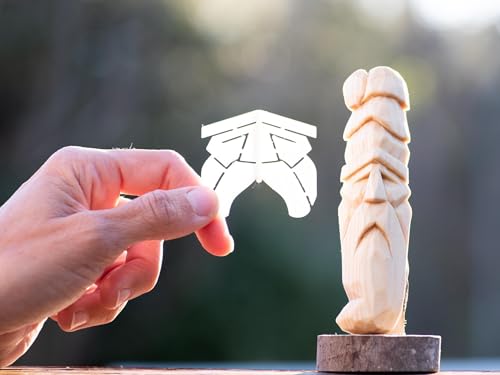
3D printed carving stencils are different from flat craft stencils because they can be designed with depth, structure, and alignment in mind.
That extra thickness can make the stencil easier to hold, harder to accidentally bend, and more reliable when tracing on wood. A well-designed 3D printed stencil feels more like a carving layout tool than a craft stencil.
This is where 3D printed stencils begin to stand out. They are especially helpful for beginners because they remove a lot of guesswork from the layout stage. Instead of trying to freehand a face, beard, body shape, hat, robe, or animal outline, the carver gets a repeatable guide.
The best 3D printed carving stencils are not just outlines. They are designed around the carving process itself. That means the stencil should help place the main features where they need to be carved, not just create a decorative silhouette.
What 3D printed stencils do well
They are durable, easy to reuse, more rigid than paper or mylar, and better suited for repeatable carving layouts.
Where 3D printed stencils fall short
Quality depends heavily on the design. A poorly designed 3D printed stencil can be too bulky, too vague, or hard to trace. The material alone does not make it good — the design matters.
Verdict: One of the best stencil styles for repeat carving, especially when the stencil is designed specifically for wood carving.
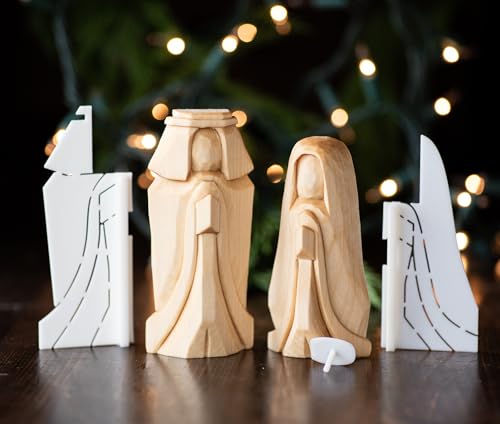
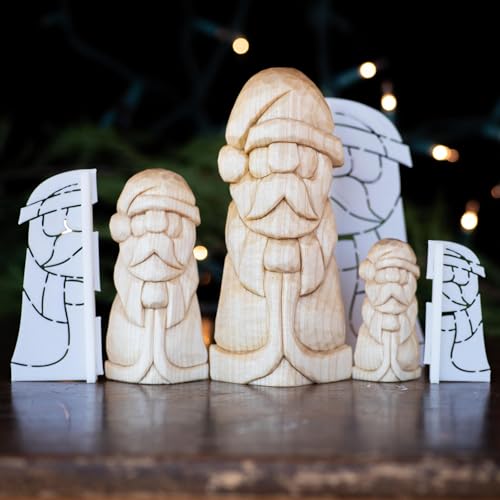
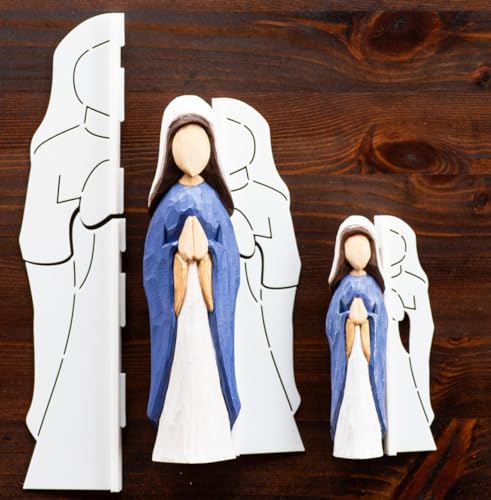
Our 3D Printed Wood Carving Stencils: The Benchmark for Beginner-Friendly Carving
3D printed wood carving stencils are the benchmark comparison in this review because they are made specifically for carving, not just crafting.
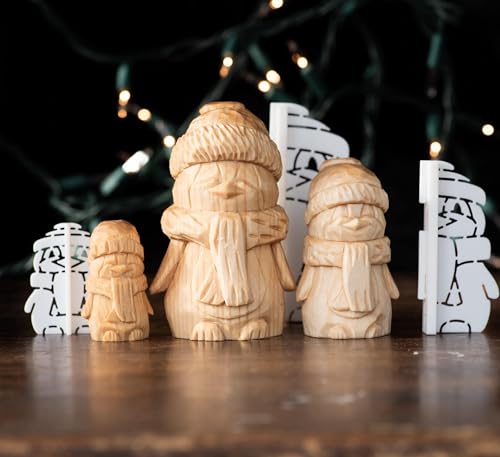
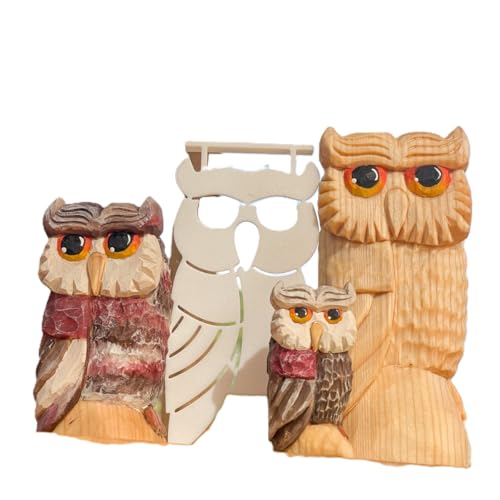
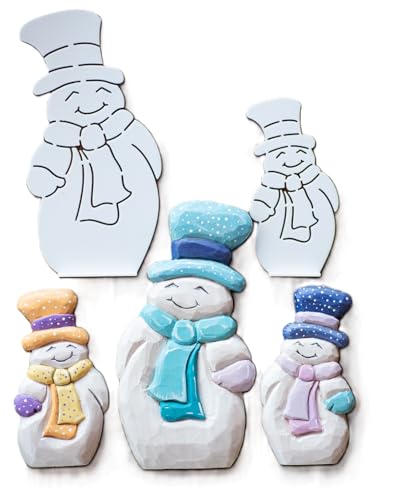
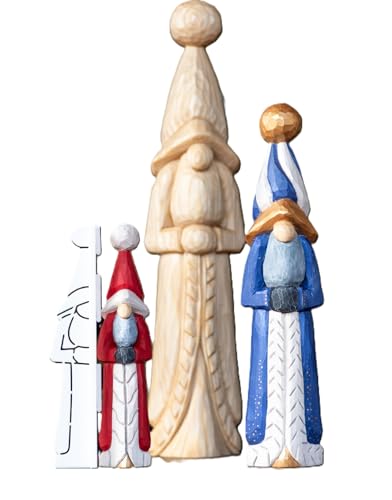
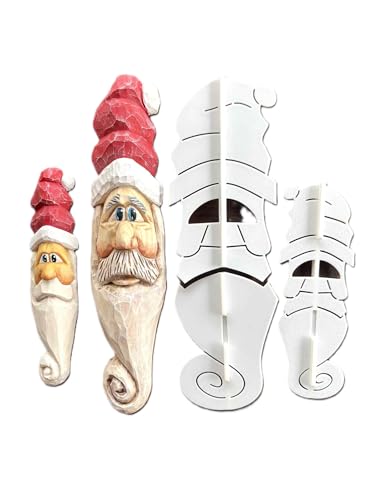
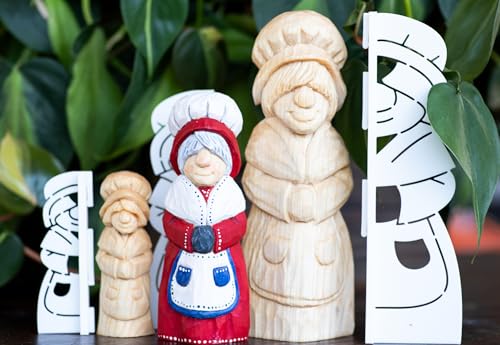
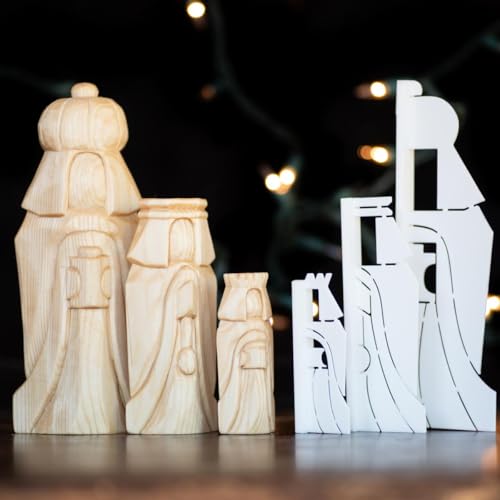
The biggest advantage is that the stencils are designed to help carvers create repeatable projects with clear layout guidance. Instead of giving you a flat decorative shape and leaving the rest up to you, our stencils are built around wood carving use cases like caricatures, Santas, gnomes, nativity figures, animals, and wood spirit-style designs.
That matters because beginner wood carving is often hardest at the layout stage. Many new carvers can make decent cuts once they know where to cut, but they struggle to draw the design consistently. A good stencil solves that problem by giving the carver a clear starting point.
The other major advantage is the tutorial support. We do not just sell the stencil and leave the customer guessing. The stencils are paired with video tutorials and project resources, which makes them much more useful for beginners.
Durability
Our 3D printed stencils feel much more durable than paper, vinyl, or thin craft stencils. Because they are rigid, they are less likely to fold, crease, or distort while tracing.
This is important for repeat carving. If you want to carve the same design multiple times for gifts, craft fairs, holiday decorations, or practice, durability matters. A stencil that changes shape over time will change your results. A rigid stencil gives you a more consistent layout from project to project.
Ease of Use
The best part of using our stencil is that the layout process feels approachable. You place the stencil, trace the important lines, and then move into carving with a much clearer plan.
For beginners, this is a big deal. Freehand drawing can be intimidating, especially on small wood blanks. Even if you understand the carving technique, drawing a face, hat, beard, body, or animal outline can be frustrating.
A stencil gives you a repeatable starting point, which means you can focus more on learning the cuts.
Carving Accuracy
Carving accuracy was one of the strongest areas for making these stencils. Because our stencils are rigid but flexible and designed for carving layouts, the traced lines are easier to follow.
The result is not that every carving looks identical. Wood carving still leaves room for personality, tool marks, style, and creativity. But the stencil helps keep the main proportions consistent.
That balance is important. A good carving stencil should not make the project feel robotic. It should give you structure while still letting the finished carving feel handmade.
Tutorial Support
This is where our stencils stands out from many generic stencil options.
A stencil by itself tells you where the design starts. A tutorial shows you how to turn that layout into an actual carving.
For beginner carvers, the tutorial support is one of the biggest reasons to choose us. We lower the barrier to entry and make the stencil feel like part of a complete learning system.
Instead of buying a pattern and wondering what to do next, you can follow along with video lessons, project examples, and written resources.
Verdict: Best overall choice for beginner-friendly, repeatable wood carving projects.
Best Stencil by Category
Best for One-Time Projects: Paper Templates
Paper templates are still useful if you only need one quick layout. They are inexpensive and easy to print, but they are not durable enough for repeated carving.
Best for Sign Carving: Adhesive Vinyl
Vinyl works well for clean lettering, logos, and flat sign work. It is accurate, but usually not reusable.
Best Budget Reusable Option: Mylar Craft Stencils
Mylar is affordable and reusable, especially for simple shapes. It is not always rigid enough for detailed carving, but it works for basic layouts.
Best Flat Reusable Option: Laser-Cut Plastic Stencils
Laser-cut plastic stencils are a strong option for repeated flat designs. They are more durable than paper or thin mylar, but may still lack carving-specific alignment features.
Best Overall for Wood Carving: 3D Printed Stencils
For actual wood carving projects, 3D printed stencils offer the best combination of durability, ease of use, carving accuracy, and beginner support.
What Makes a Good Wood Carving Stencil?
After comparing different stencil types, the best wood carving stencils had a few things in common.
1. They stay in place while tracing
If the stencil moves, the whole project can start crooked. A good stencil should be easy to hold steady and trace confidently.
2. They create readable carving lines
The lines should be clear enough to follow with a V-tool or knife. If the stencil creates confusing or broken lines, beginners will struggle.
3. They are durable enough for repeated use
A stencil should be able to survive multiple projects. This is especially important if you are carving gifts, selling finished carvings, or practicing the same design.
4. They are designed for carving, not just decoration
Some stencils look nice but do not translate well into carving. A good carving stencil should guide the actual cutting process.
5. They help beginners get started
The best stencil is not just accurate. It should make the project feel less intimidating.
Are Wood Carving Stencils Cheating?
No. Wood carving stencils are not cheating.
A stencil does not carve the wood for you. It does not control your knife, choose your cuts, shape the details, or finish the project. It simply gives you a reliable starting layout.
For beginners, that can make the difference between giving up and finishing a project.
For experienced carvers, stencils can save time and make repeat projects easier. If you are carving multiple ornaments, Santas, gnomes, nativity figures, or craft fair items, a stencil helps keep your results consistent.
Using a stencil is no different from using a ruler, compass, pattern, bandsaw template, or layout guide. It is a tool.
Final Recommendation: Which Wood Carving Stencils Are Worth It?
If you only need a one-time pattern, a paper template is fine.
If you are carving a sign or lettering project, adhesive vinyl may be the cleanest option.
If you want a general reusable craft stencil, mylar or laser-cut plastic can work.
But if your goal is to carve repeatable characters, beginner-friendly projects, ornaments, wood spirits, Santas, gnomes, nativity figures, or small decorative carvings, 3D printed carving stencils are the most practical choice.
Among the options compared, Ronan3D’s 3D printed wood carving stencils are the strongest overall recommendation because they combine durable physical stencils with beginner-friendly tutorials.
That combination matters. You are not just buying a shape to trace. You are getting a carving guide that helps you start the project, follow the layout, and learn the process.
FAQ: Wood Carving Stencils
What is the best stencil material for wood carving?
For repeat wood carving, rigid plastic or 3D printed stencils are usually better than paper, vinyl, or thin mylar. They are more durable, easier to reuse, and less likely to shift or distort while tracing.
Can beginners use wood carving stencils?
Yes. Beginners are often the best candidates for wood carving stencils because the stencil removes the pressure of drawing the design from scratch. This lets new carvers focus on tool control, depth, shape, and finishing.
Are paper templates good enough for wood carving?
Paper templates are fine for one-time projects, but they are not ideal for repeated use. They can tear, wrinkle, shift, or lose accuracy after handling.
Are 3D printed stencils better than mylar stencils?
For carving, 3D printed stencils are often better because they are more rigid and durable. Mylar is great for painting and simple outlines, but it can flex while tracing detailed carving layouts.
Do Ronan3D stencils come with tutorials?
Our stencils provide wood carving tutorial resources to help users understand how to use the stencils and complete the projects. You can find those tutorials at ronan3d.com/tutorials. What tools do I need to use a wood carving stencil?
At minimum, most beginner carving projects can be started with a pencil, a wood blank, a V-tool, a carving knife, and a safe way to hold the wood. Cut-resistant gloves are also strongly recommended for beginners.