Back to Blog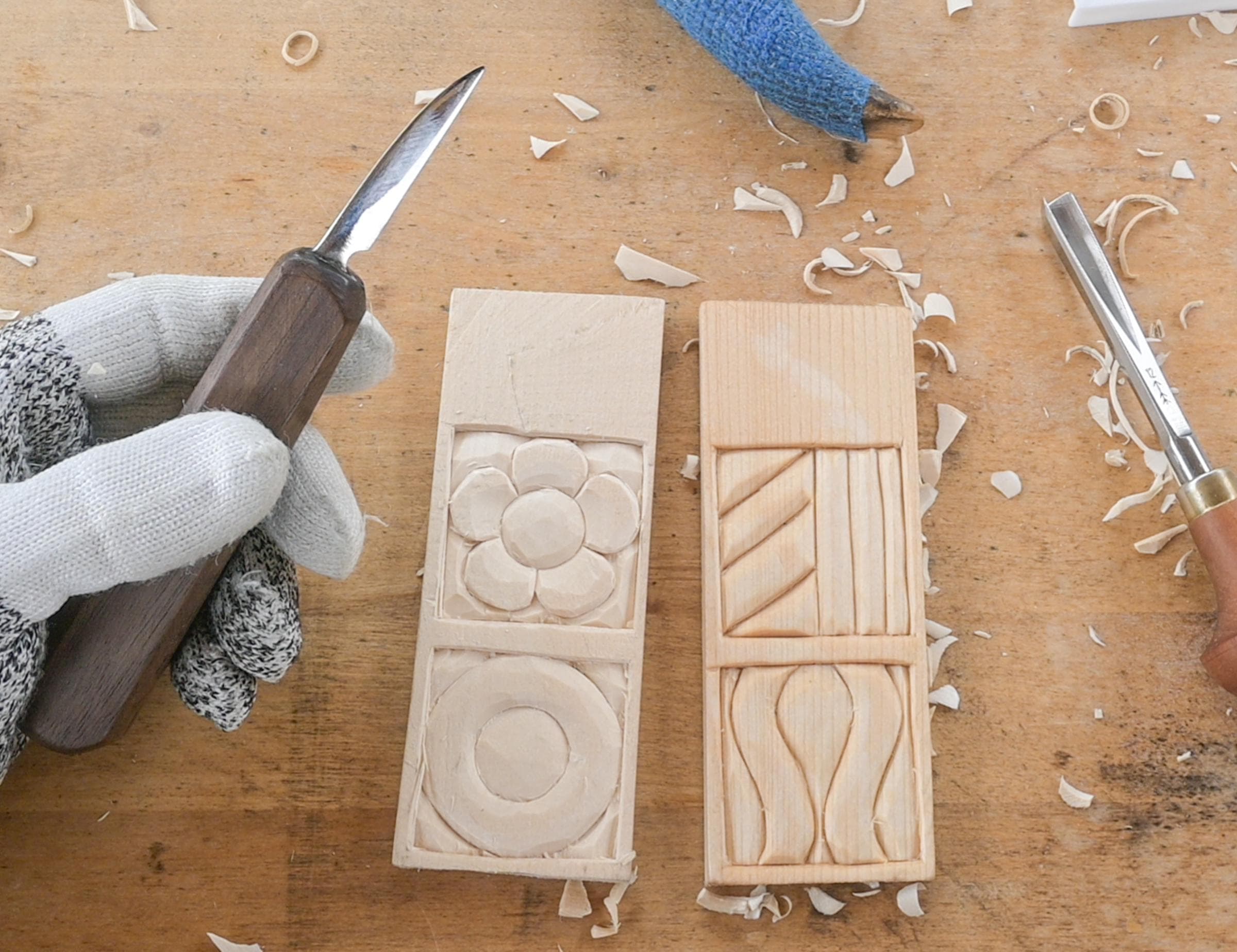
Beginner Wood Carving Supplies You Actually Need
Getting started with wood carving can feel overwhelming at first. Here's a few tips to help get you started!
June 5, 2026
Getting started with wood carving can feel overwhelming at first.
You search online and suddenly people are talking about dozens of chisels, expensive knife sets, sharpening systems, mallets, leather strops, and tools you’ve never even heard of.
The truth is, you really only need a few basic tools to start making carvings you can actually be proud of.
Especially if you’re using stencils and following tutorials, you can skip a lot of the frustration and jump straight into carving.
These are the core tools I recommend for beginners and what each one is actually used for.
1. Carving Knife
The carving knife is your main tool.
This is what you’ll use for:
- Rough shaping
- Cutting along stencil lines
- Removing larger pieces of wood
- Cleaning up edges
- General detail work
For most beginner stencil projects, the knife does the majority of the work.
A good carving knife should:
- Feel comfortable in your hand
- Stay sharp
- Have a thin blade for control
- Slice wood cleanly instead of tearing it
When to use it
Use the knife early in the carving process to remove larger chunks of wood and define the basic shape of the carving.
For example, if you’re carving a gnome, the knife helps establish the beard shape, hat angle, and body profile before adding fine detail.
Beginner tip
Don’t force the blade through the wood.
Sharp knives carve with controlled slicing motions, not brute force.
That’s one of the biggest beginner mistakes.
Recommended products
2. V Tool (V-Gouge)
The V tool is what creates those clean carved lines that make details pop.
It cuts a groove shaped like a “V” into the wood.
This is one of the most useful tools for carving because it helps:
- Separate sections visually
- Add texture
- Define outlines
- Create fur, hair, feathers, beards, and folds
When to use it
After the basic shape is carved with your knife, the V tool helps define the details.
For example:
- Beard lines on any face
- Fur texture on animals
- Outlines around letters or shapes
- Decorative borders
Why beginners love it
A V tool instantly makes carvings look more detailed with relatively little effort.
Even simple carvings start looking professional once you add clean texture lines.
Beginner tip
Use light pressure at first.
A lot of beginners push too hard and end up digging too deep into the wood.
Small controlled cuts usually look better.
Recommended products
A single small V tool is enough to start. You do NOT need an entire gouge set immediately.
3. Palm Gouge
Palm gouges are used for scooping and shaping curved areas.
Unlike a knife, which makes straight slicing cuts, gouges remove wood in rounded channels.
They’re extremely useful for:
- Rounded surfaces
- Faces
- Beards
- Bowls and curved textures
- Smoothing transitions
When to use it
Use a palm gouge once the rough shape already exists.
It helps refine the carving and make things look softer and more natural.
For example:
- Rounding cheeks on a character
- Smoothing a beard
- Carving folds in clothing
- Adding depth to textures
Why palm tools are beginner friendly
Palm gouges are smaller and easier to control than full-sized mallet chisels.
That makes them less intimidating for new carvers.
Beginner tip
Start with one medium sweep gouge.
You don’t need 12 different sizes immediately.
One good gouge can handle most of your projects.
Recommended Products
- Palm Gauge: https://amzn.to/40uKFO1
4. Cut Resistant Gloves
If you’re new to wood carving, get gloves. Seriously.
Almost every beginner eventually slips with a knife at some point.
A cut resistant glove helps protect the hand holding the wood.
Why they matter
Beginners are still learning:
- Knife control
- Grain direction
- Pressure
- Safe cutting angles
Gloves help make the learning process much safer.
When to use them
Any time your support hand is near the blade.
Especially during:
- Push cuts
- Detail cuts
- Tight corners
- Small carvings
Beginner tip
A glove does NOT make you invincible.
Still carve slowly and carefully.
The glove is backup protection, not permission to carve recklessly.
Recommended products
Simple Level 5 cut resistant gloves work perfectly fine for beginners.
As an Amazon Associate I earn from qualifying purchases.
Watch related stencil tutorials
Pair this guide with Ronan3D video tutorials for step-by-step carving demonstrations and product walkthroughs.
Browse Tutorials